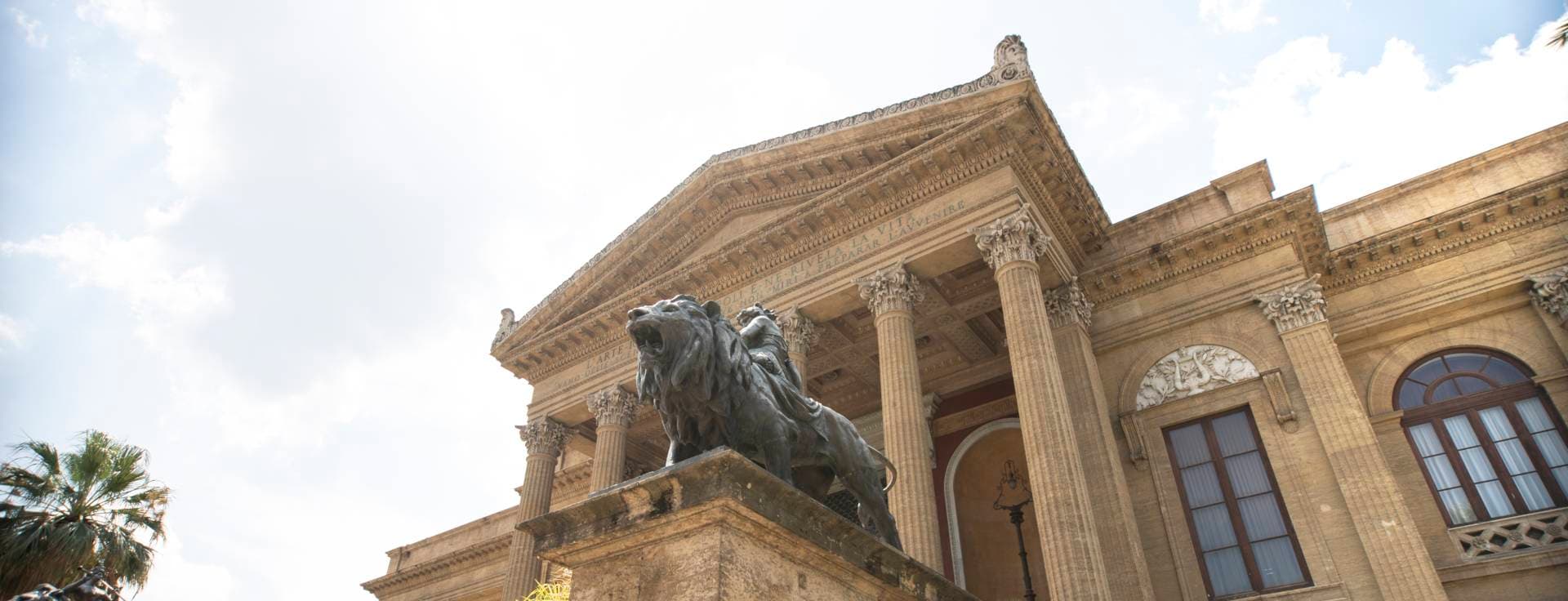
This is the inscription on the pediment of the splendid Teatro Massimo: rich in meaning, and perfect for Palermo — a city of art, culture and tradition, long a nerve centre of the Mediterranean and a crossroads between Europe, Africa and the Middle East.
Though built in the neoclassical style, the Teatro Massimo is one of the most striking examples of how Art Nouveau — the Liberty style — influenced Palermo between the late 19th and early 20th centuries. In those years the city's aristocracy sought to match that of Europe: it was decided to build not more churches but theatres and villas, and the Liberty imprint is still visible in many of the city's mansions and in the seaside resort of Mondello.
A construction that spanned decades
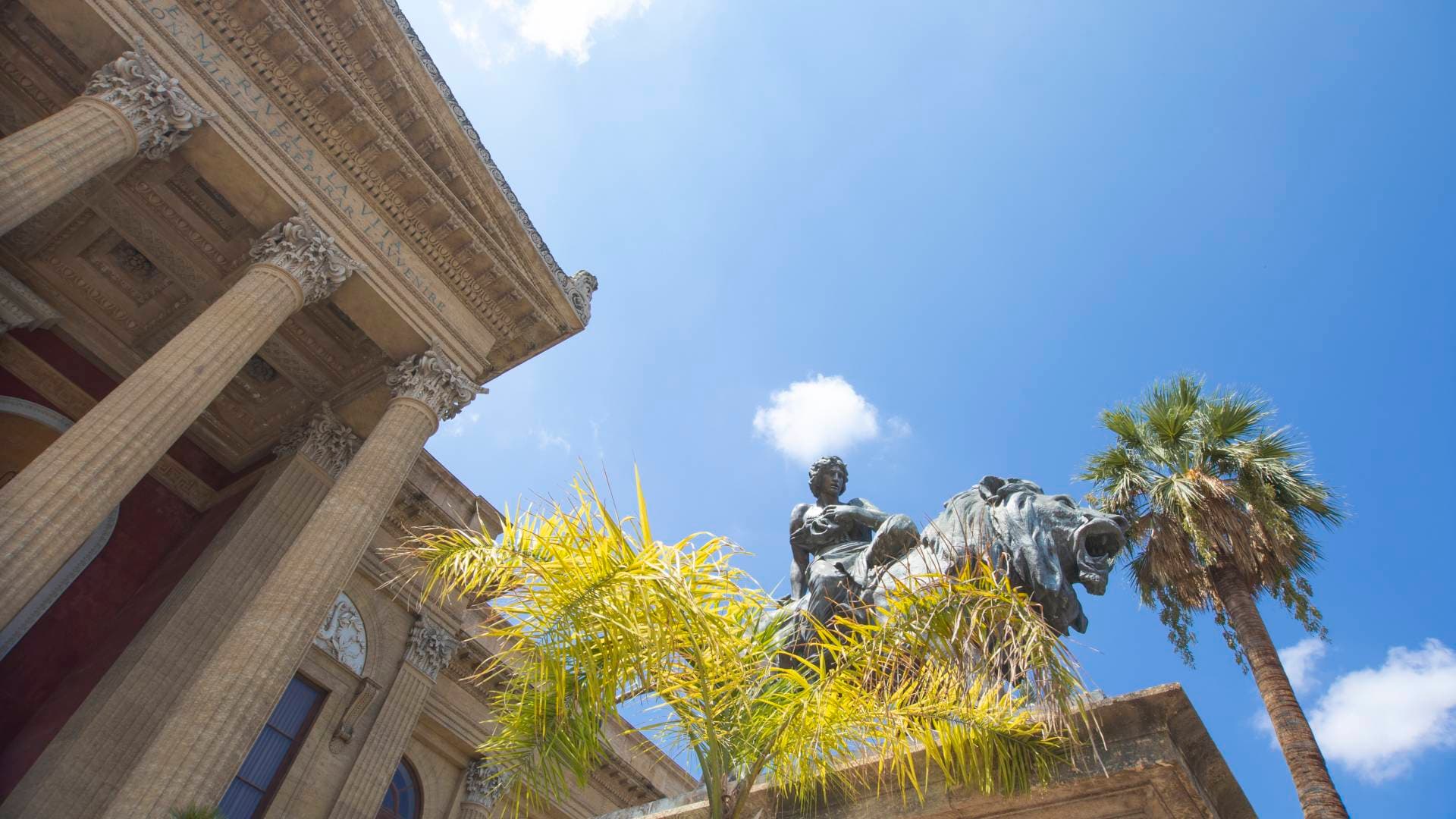
Construction of the theatre — the largest opera house in Italy and the third largest in the world, behind only the Paris Opéra and the Vienna Staatsoper — began in 1875 under architect Giovan Battista Basile. On his death the task passed to his son Ernesto Basile, who designed the interiors and completed the exterior: it is with him that the Liberty style enters the Teatro Massimo emphatically, turning it into one of the most beautiful in Europe.
One of its peculiarities is the acoustics of the Sala Pompeiana: thanks to a slight symmetry, anyone standing at the centre of the room hears their own voice extraordinarily amplified, while those elsewhere, owing to the resonance effect, cannot make out a single word.
A season for everyone
Every season at the Teatro Massimo is full of prestigious operas and ballets, as well as concerts and special programmes for the youngest visitors, designed to introduce children to the theatre and leave them enchanted.
B&B Gallery Luxury is just a short distance from the theatre: attending an opera or a ballet in one of the largest and most beautiful theatres in the world is an opportunity not to be missed. Our staff is on hand for information about upcoming events.